We are making biological tissue digitally programmable.
"The ones who are crazy enough to think they can change the world are the ones who do."
Apple Think Different campaign, 1997
To make tissues designable in software: to turn the coordination of biological signaling across space and time from something we merely observe into something we can specify, predict, and engineer, the way an architect designs a building before it is built.
We will not get there by cataloguing what is already known. We bet on ambition over certainty, imagination over knowledge, doing over theorizing. Most of what we try will not work. That is the cost of pushing far enough past the frontier to actually change something. It is expected. It is not failure.
We approach problems from first principles. We combine theory, computation, and close collaborations with experimentalists to understand the informational flow of biological signaling from molecules to tissue.
To do this, we ask:
How do tissues use spatial patterning of signals to control cell identity and morphogenesis?
Characterising and decoding temporal fluctuations in molecular expression and morphology to reveal causal regulation mechanisms.
Building phenomena-agnostic, information-theoretic frameworks to quantify how information flows between cells and across tissue components.
Building causal frameworks to model and interpret information flow across molecules, cells, and tissue, identifying the tipping points that dictate organismal fate.
Selected papers. Lab members highlighted in teal.
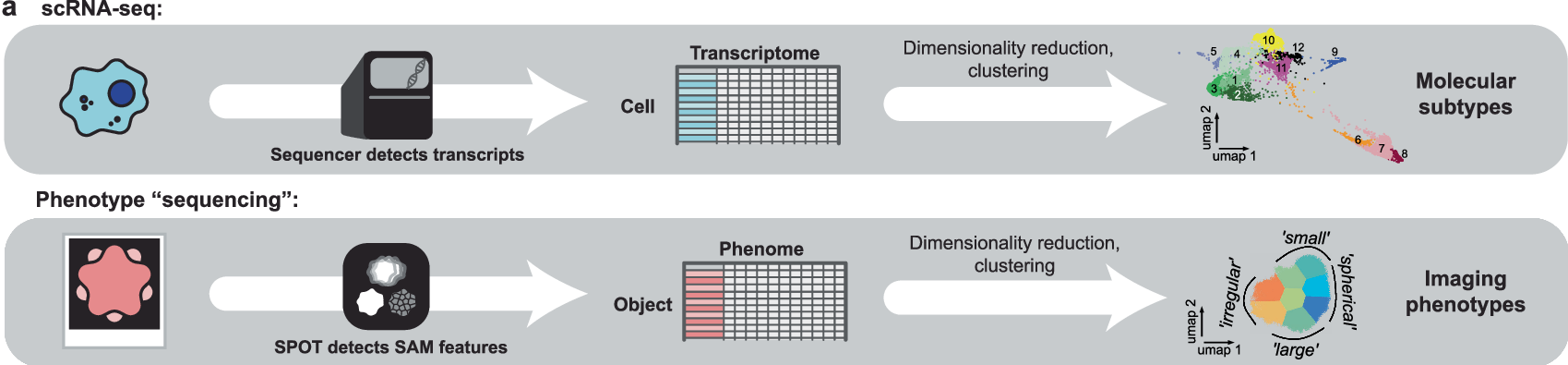
Introduces the SPOT framework and SAM feature taxonomy as a standardised vocabulary for describing cellular image phenotypes, enabling systematic cross-experiment comparison of cell morphology, texture, and dynamics.
Applies the SPOT phenomics pipeline to 3D organoid imaging datasets, linking quantitative morphodynamic phenotypes to genotype perturbations and cellular function in a scalable, interpretable framework.
Introduces u-segment3D, a universal method for deriving consensus 3D cell segmentations from ensembles of per-slice 2D predictions, enabling robust 3D cell delineation across diverse imaging modalities without retraining.
Transforms 3D cell surfaces into multiple canonical 2D representations, enabling population-level quantitative analysis of how membrane-associated molecular signals co-localise with dynamic 3D morphology.
Introduces u-infotrace, a multiscale framework for tracing spatiotemporal information flows at the pixel level in time-lapse imaging, enabling causal analysis of signal propagation across cellular and tissue scales.
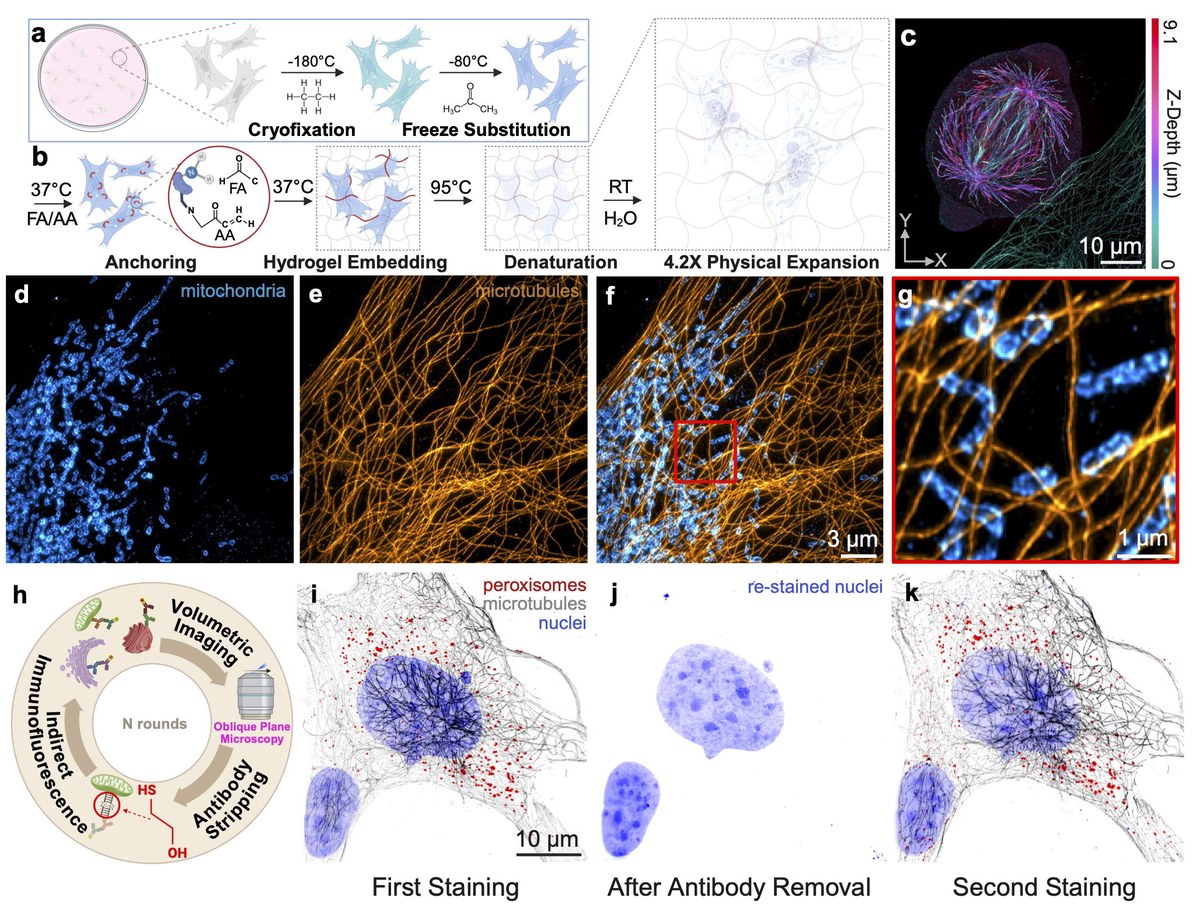
Presents 3D CyCIF, a volumetric cyclic immunofluorescence platform enabling highly multiplexed protein profiling in intact tumour tissue, revealing the spatial organisation of immune cell states and signalling niches with unprecedented depth.
The Biological Information Architecture Lab opens its doors at the Center for Computational Systems Biology, Vanderbilt University.